Founders
Why AI Is About to Split Private Security In Two
Why AI body cameras are about to split private security into outcome-driven firms and labor-only firms.
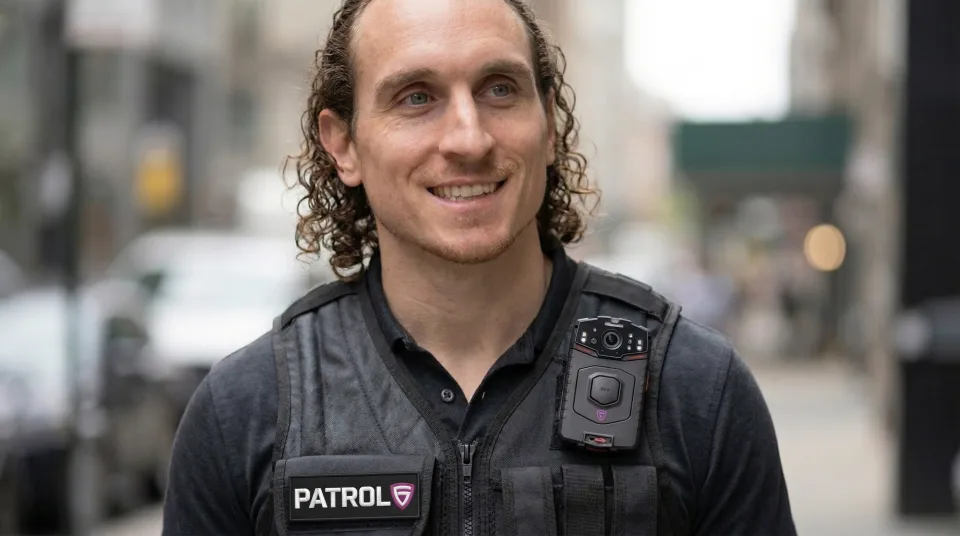
Private security has a math problem: clients want better outcomes, but they don't want runaway labor costs. Security firms want stronger performance, but margins are thin, staffing is volatile, and supervisor capacity is finite.
That tension is why the industry is about to split into two categories:
Firms that operationalize AI in the field and sell measurable outcomes
Firms that keep selling headcount and hope
This isn't a future prediction. It's already visible in the numbers.
The U.S. Bureau of Labor Statistics projects about 162,300 openings per year for security guards and gambling surveillance officers, largely driven by replacement needs. That's a system under constant staffing churn, not a system trending toward stability. Source
And churn is not a rounding error. The Center for American Progress cites private security turnover rates more than 50% annually across the industry, which makes consistency and training an operational tax every single year. Source
So here's the core problem: buyers want stronger performance, but the labor market keeps resetting your workforce.
The Old Model Was "Document and Explain"
Staff the post
Record incidents
Write reports later
Defend decisions after the fact
That's where traditional bodycams shine: evidence capture, documentation, and after-action review.
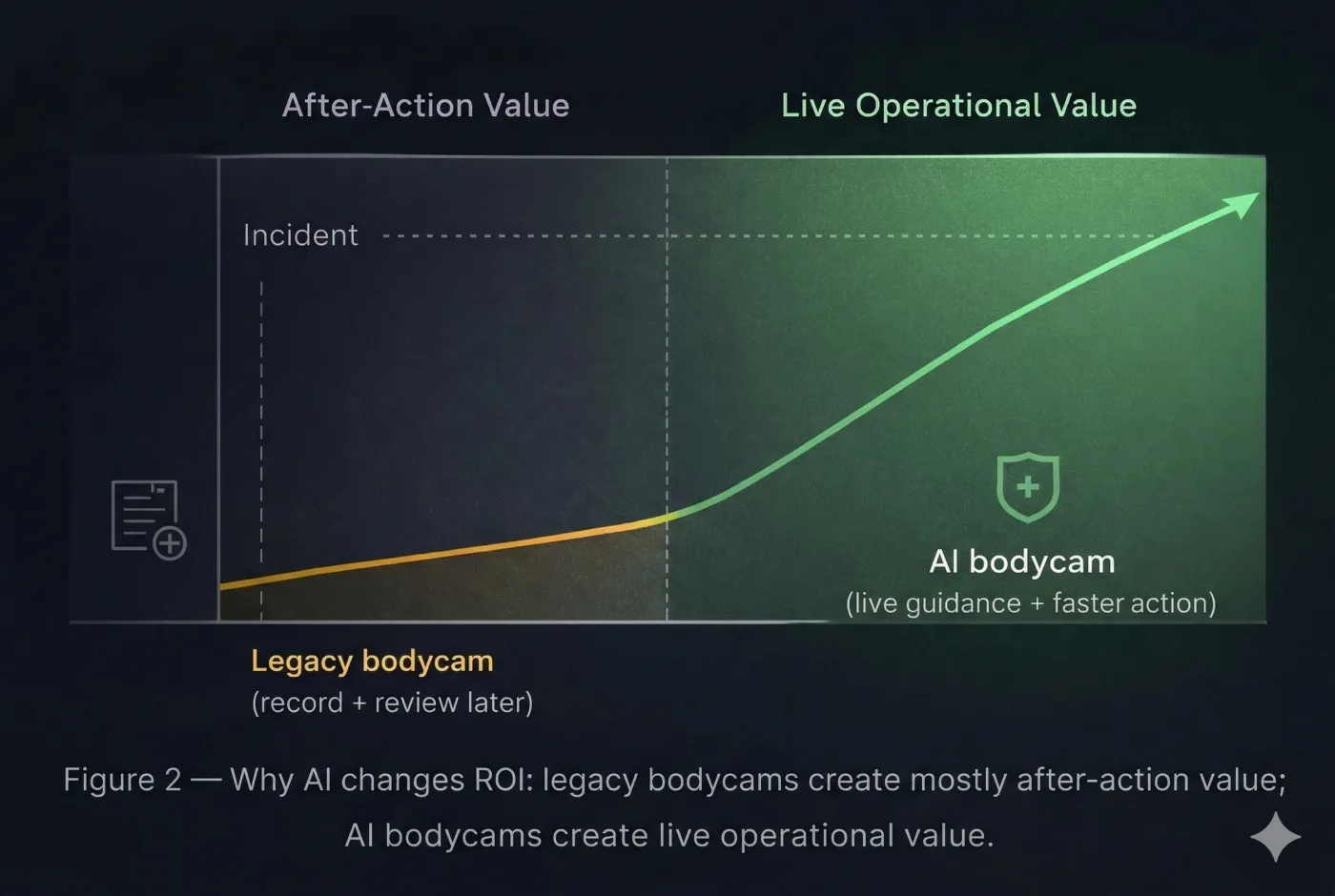
But after-action value has a ceiling. It helps you explain what happened. It doesn't reliably prevent what would have happened.
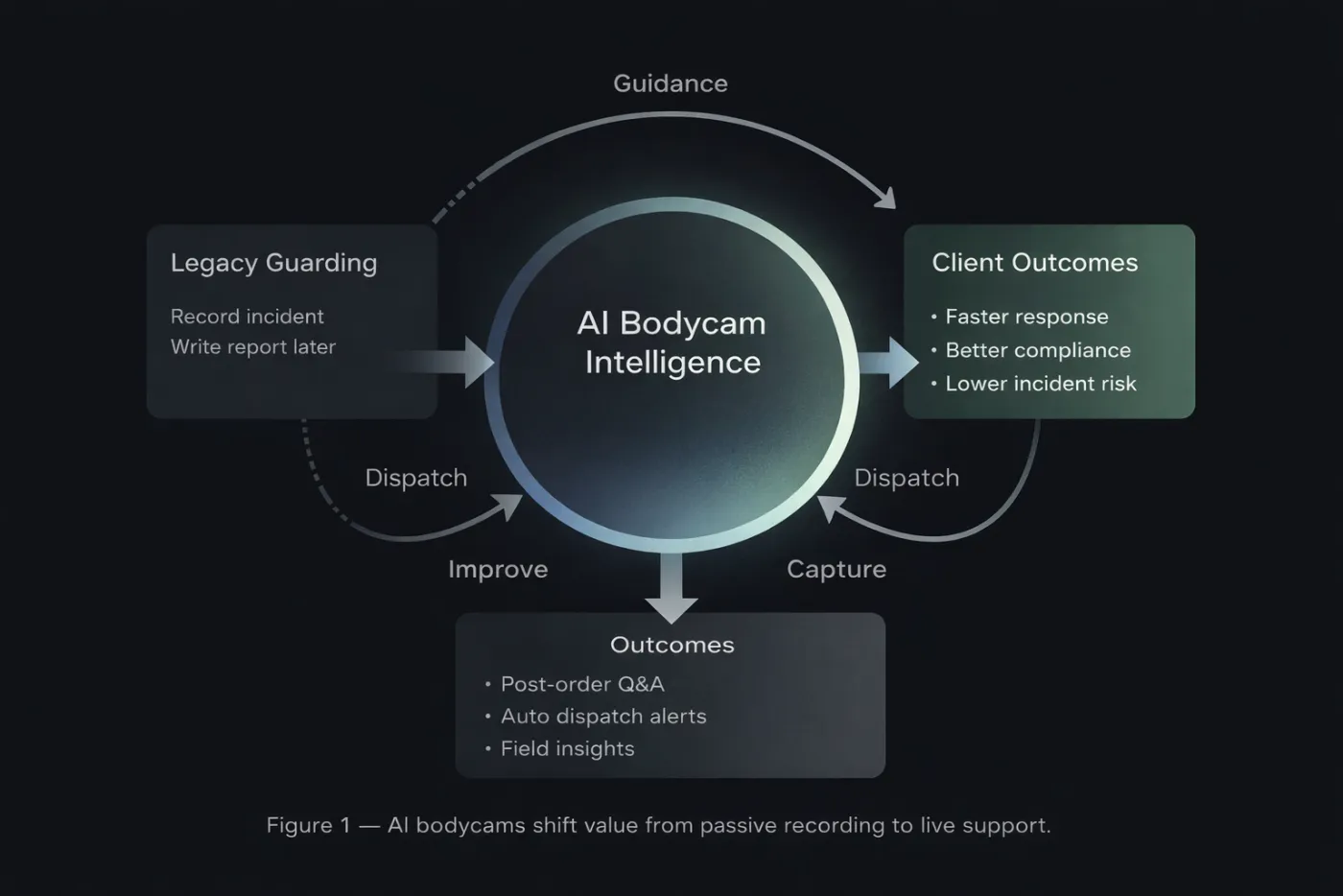
The new model is different: the camera becomes an operational interface, not just a recorder. A passive camera documents what happened. A live AI system influences what happens next.
Why This Shift Is Happening Now
Across the broader economy, AI is moving from "office productivity" into "workflow execution." McKinsey estimates current generative AI plus other technologies have the potential to automate work activities that absorb 60–70% of employees' time today. Source
The implication is not job replacement. The implication is massive augmentation and leverage inside workflows.
McKinsey also estimates that by 2030, activities accounting for up to 30% of hours worked across the U.S. economy could be automated, accelerated by generative AI. Again, the point is leverage. Source
Security is labor-heavy. Labor-heavy industries feel augmentation first, and they feel it hard. That's what "AI bodycams" actually represent when they're real: a way to get supervisor-level consistency without supervisor-level headcount.
The Real ROI Difference: After-Action vs. Live Operational Value
Most "AI bodycam" positioning in the market is still stuck in after-action value:
AI summaries
Faster reports
Better search
Faster review
That's nice. It's also defensive.
The real ROI shift happens when the system creates live operational value:
Post-order support at the moment of uncertainty
Faster escalation when thresholds are crossed
Fewer missed steps during high-stress incidents
Better compliance before supervisors ever get involved
Legacy bodycams mostly produce value after the incident. AI bodycams produce value during operations.
A Buyer's Filter That Cuts Through Feature Theater
If you're a security firm, supervisor, or client-side security director, ignore feature lists.
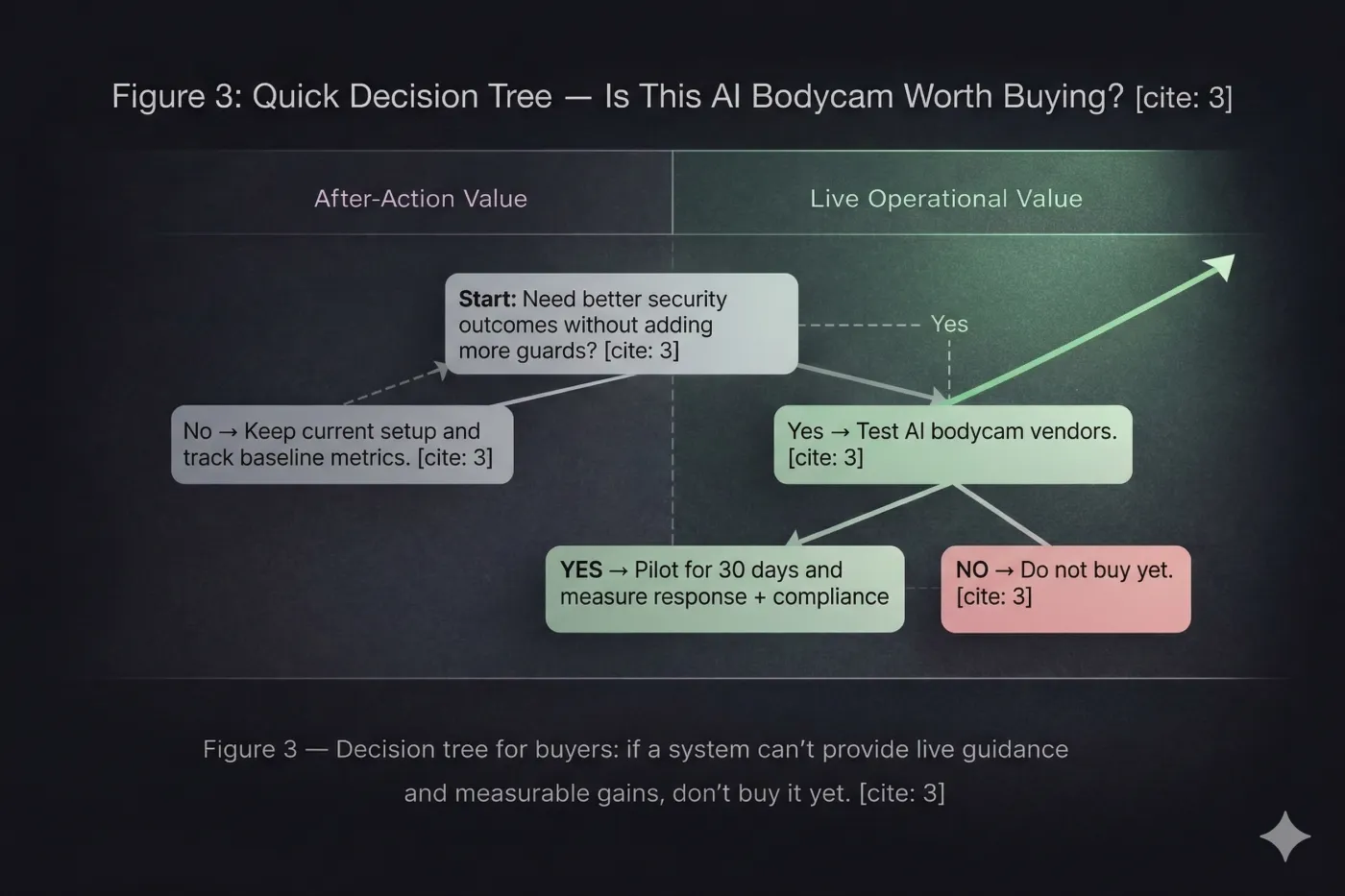
Ask one question: Can this system move operating metrics that clients care about?
Use these as the baseline filter:
Incident response time (median + P95)
Dispatch escalation latency
Post-order compliance rate
Report completion time
Supervisor rework hours
Client dispute resolution cycle time
If a vendor can't tie claims to measurable movement in these metrics, it's feature theater.
And feature theater won't survive the next 12–24 months, because buyers are increasingly intolerant of "AI" that doesn't reduce risk or improve execution.
ASIS has flagged turnover as a major operational challenge for guard providers: in one reported survey summary, more than 40% of security service providers selected turnover as the top challenge, with rising pay rates and labor shortage drivers cited. Source
In a high-turnover environment, "AI that only summarizes later" is not leverage. Live guidance and measurable consistency is leverage.
The Closing Reality
This is the split:
Firms that treat AI as after-action paperwork acceleration
Firms that treat AI as real-time execution infrastructure
One improves reporting. The other improves outcomes.
The firms in the second group will compound advantages: faster response, tighter compliance, cleaner handoffs, fewer disputes, more defendable performance, and stronger renewals.
The firms that wait will find themselves defending hourly rates while competitors sell outcomes with proof.
Private security isn't just adopting bodycams. Private security is moving toward AI-guided execution. And the train has already left the station.
Skylar
Where to go next
If you are evaluating this shift now, start with the AI body camera platform, compare frontline workflow needs on the security guard body camera page, and use the buyer's guide to structure vendor review.